

Choosing how to watch TV and movies can feel confusing. Two popular options stand out: IPTV and Netflix. Many people search for the difference between IPTV and Netflix. Others look at IPTV vs Netflix to decide which fits their needs better.
This guide covers everything clearly. You will find an overview of IPTV and Netflix. You will see the key differences. Real examples appear next. Then comes the answer to which one is better. The goal is simple: give you clear, useful information so you can choose with confidence.
Overview of IPTV and Netflix
What is IPTV?
IPTV means Internet Protocol Television. It sends television content over the internet. It does not use traditional cable, satellite, or antenna signals.
A typical IPTV service offers thousands of live TV channels. These include news, sports, entertainment, and international options. Most services also provide an electronic program guide (EPG). Many include catch-up or time-shifted TV. Large video-on-demand (VOD) libraries of movies and series usually come with the package too.
You can watch IPTV on smart TVs, Fire Stick, Android boxes, phones, or computers. Quality and channel lists change a lot from one provider to another. Some IPTV comes from official telecom or ISP packages. Other services come from third-party providers and sit in a less regulated space.
What is Netflix?
Netflix is a subscription video-on-demand platform. It offers a carefully chosen library of movies, TV series, documentaries, and exclusive original shows. Everything is on-demand. You pick what to watch and when to watch it. Netflix has no traditional live TV channel lineup.
The platform focuses on high-quality productions. It gives strong personalized recommendations. Netflix supports multiple user profiles. It allows offline downloads. Its interface feels smooth and works on almost every device.
In short, IPTV aims to deliver a full TV experience with live channels plus on-demand content. Netflix specializes in high-quality on-demand entertainment and exclusive originals.
What Is the Difference Between IPTV and Netflix?
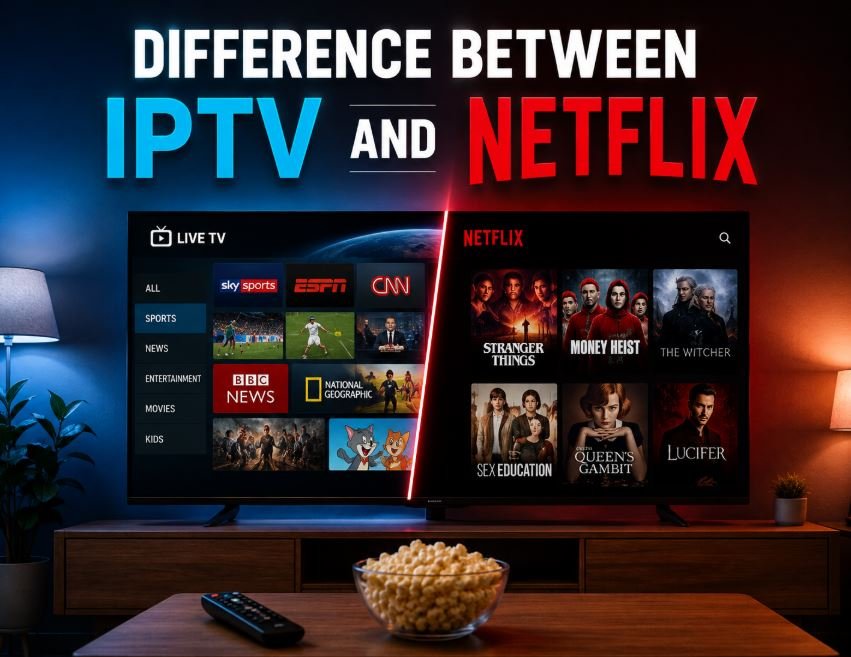
The main difference between IPTV and Netflix centers on content type and delivery style.
| Aspect | IPTV | Netflix |
|---|---|---|
| Primary Content | Live TV channels + VOD | On-demand movies, series & originals only |
| Live TV / Sports / News | Yes (thousands of channels possible) | No (or very limited special events) |
| Content Library | Broad (live + large VOD, varies by provider) | Curated (licensed + exclusive originals) |
| Pricing Model | Often flat monthly/yearly (varies widely) | Tiered by quality & concurrent streams |
| User Experience | Functional (EPG, channel surfing) | Highly polished recommendations & interface |
| Offline Viewing | Usually limited or none | Yes (downloads on mobile/supported devices) |
| Reliability & Legality | Varies by provider | Consistently legal and reliable |
| Device Flexibility | Broad with player apps | Near-universal native apps |
Content model creates the biggest gap in the IPTV vs Netflix comparison. Netflix rotates licensed titles. It invests heavily in original series and films. IPTV focuses on real-time channels from many countries. It also adds a VOD section that can grow large, though it lacks the same careful curation.
Delivery and features differ as well. IPTV often includes an electronic program guide. It supports channel surfing and catch-up TV. These features feel close to traditional television. Netflix has no fixed schedule. You simply search or follow its smart recommendations.
Pricing usually favors IPTV when you want high volume of live content. Exact costs depend on the provider and your region. Netflix uses clear tiers. Higher tiers unlock better video quality and more simultaneous streams.
Reliability and legality favor Netflix strongly. Official IPTV from licensed providers stays fully legal. Many unofficial services carry higher risks of instability or legal questions.
Pros and Cons of IPTV and Netflix
IPTV Pros
- You get live television, sports, news, and events as they happen.
- You can access potentially thousands of channels, including international and niche options.
- One service often combines live channels and a large VOD library.
- Costs stay relatively low for the amount of content you receive.
- Catch-up TV and multi-device support work well with the right setup.
IPTV Cons
- Quality, stability, and channel lists depend heavily on the specific provider.
- Initial setup can need more technical steps, such as apps or playlists.
- The interface and recommendation system feel less polished.
- Offline viewing rarely exists.
- Some services operate in legal or reliability gray areas.
Netflix Pros
- You enjoy award-winning original series and films available only on the platform.
- The user interface stays clean. Profiles, parental controls, and smart recommendations work smoothly.
- Streaming remains reliable thanks to strong infrastructure.
- Offline downloads help during travel or weak connections.
- The service stays fully legal and consistent in most places (catalogs still vary by region).
Netflix Cons
- You find no live TV, live sports, or traditional channel surfing.
- The content library stays finite. Titles come and go based on licensing deals.
- Prices have risen over time. Higher tiers are needed for 4K and extra streams.
- Catalogs stay locked to specific regions in many cases.
Examples of Netflix and IPTV
Netflix examples
Netflix stand out through exclusive originals. Shows such as Stranger Things, The Crown, Wednesday, and Squid Game launched only on Netflix. The platform also offers a strong mix of licensed movies, documentaries, anime, and kids’ content. Personalized rows based on your viewing history make discovery easy.
IPTV examples
It focus on real-time viewing. You can watch live sports matches such as Premier League, NFL, NBA, or major international events (depending on the package). Twenty-four-hour news channels from multiple countries appear regularly. Local and international entertainment channels fill the guide. PPV events sometimes come included. Large VOD sections add movies and series. Many users also enjoy catch-up of recent broadcasts. Exact channel counts and rights change from one service to another.
These examples show why the difference between IPTV and Netflix matters. One platform excels at exclusive storytelling and convenience. The other shines at real-time breadth and traditional TV habits. Some popular IPTV names are Pixzo TV, Polu TV, Youtube TV, Hulu TV, Roku TV and more.
Which One Is Better, IPTV or Netflix?
Neither option wins in every case. The better choice depends on what you watch most often.
Choose Netflix if exclusive original series matter most to you. Pick it if you want a clean, reliable experience and offline viewing. Choose it when you do not need live sports or news. Netflix remains one of the strongest pure on-demand platforms available.
Choose IPTV if live television, sports, international channels, or news rank higher. Select it when you want maximum content volume for the price. IPTV can act as a broader cable-like replacement when you pair it with a stable provider and solid internet.
Many households use both services together. They keep Netflix (or similar platforms) for premium originals. They add a solid IPTV or live-TV option for sports, news, and channel variety. This hybrid approach often delivers the best overall value and coverage.
Your internet speed, preferred devices, budget, and viewing habits should guide the final decision. Think about whether you binge series or follow live events. Always check current pricing, available trials, and terms of service before you commit.
Read also more related topics: Difference Between Kodi and IPTV
Difference Between IPTV and Cable TV
Difference Between IPTV and Sling TV
Related FAQs
Is IPTV the same as Netflix?
No. Netflix is a pure on-demand streaming service focused on its library and originals. IPTV is a technology and service model that typically includes live channels plus on-demand content.
Can I watch Netflix content on IPTV?
Official Netflix streams require a Netflix subscription and the official app. Some IPTV VOD libraries may include similar titles. These are not the official Netflix service. They lack its features, recommendations, and interactivity.
Which is cheaper: IPTV or Netflix?
It varies. Many IPTV plans offer extensive live and VOD access at competitive flat rates. Netflix pricing stays transparent and tiered by quality and screens. Total cost depends on the features and content volume you need.
Does IPTV have better sports coverage than Netflix?
Generally yes. Live sports and major events form a core strength of many IPTV services. Netflix holds only limited or occasional live sports rights.
Is IPTV legal?
Legitimate IPTV services that properly license content are legal. Unauthorized services that redistribute channels without rights exist in a gray or illegal area depending on location. Always choose reputable, properly licensed options when possible.
Can I use both IPTV and Netflix together?
Yes. Many people run both on the same devices, such as a smart TV or streaming stick. They simply switch between apps as needed.
Conclusion
The difference between IPTV and Netflix comes down to purpose. IPTV delivers a fuller television experience. It brings live channels, sports, news, and VOD together. Netflix delivers polished, on-demand entertainment. It centers on exclusive originals and a superior user experience.
When you compare IPTV vs Netflix, ask yourself a simple question. Do you value real-time content and volume more? Or do you prefer curated quality and convenience? For many viewers, the smartest solution is not an either-or choice. A combination covers both live viewing and premium series.
Evaluate your habits carefully. Test reliable options where available. Choose the mix that keeps your screen full of what you actually want to watch. You can enjoy great content without unnecessary complexity or cost.

One thought on “Difference Between IPTV and Netflix | IPTV VS Netflix Explained”