
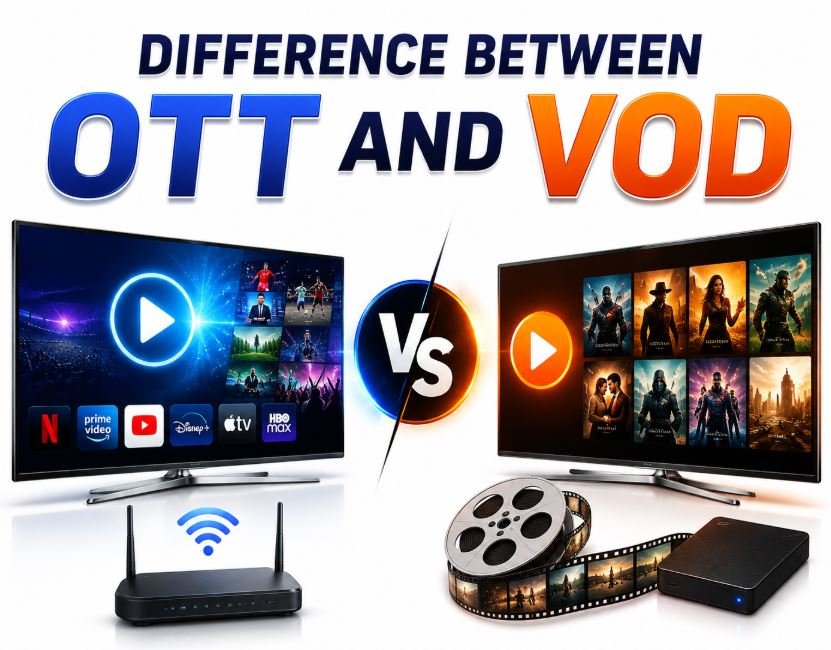
Streaming has changed the way we watch movies, shows, and live content. Two terms appear everywhere: OTT and VOD. Many people use them as if they mean the same thing. They do not. Understanding the difference between OTT and VOD helps you choose the right platforms and get more value from your subscriptions.
This guide explains OTT vs VOD in simple terms. You will learn what each one means, how they differ, their pros and cons, key benefits, and which option suits different needs. We also include a clear comparison and answers to common questions.
Definition of the OTT and VOD
What Is OTT?
OTT stands for Over-The-Top. It refers to any media service that delivers content over the internet and bypasses traditional cable, satellite, or broadcast TV. Popular examples include Netflix, Disney+, Amazon Prime Video, Hulu, and YouTube.
OTT platforms sit “over the top” of regular internet connections. You only need a stable broadband or mobile data link. These services can offer live TV, on-demand shows, original series, sports, and news—all in one app or website.
What Is VOD?
VOD stands for Video On Demand. It describes content you can watch whenever you want instead of waiting for a scheduled broadcast. You select a title and start playing it at your preferred time.
VOD is a delivery method rather than a full platform type. You find VOD inside many services: Netflix movie libraries, YouTube videos, cable catch-up features, and hotel room movie systems. Pure VOD services focus only on on-demand titles and rarely include live channels.
What Is the Difference Between OTT and VOD?
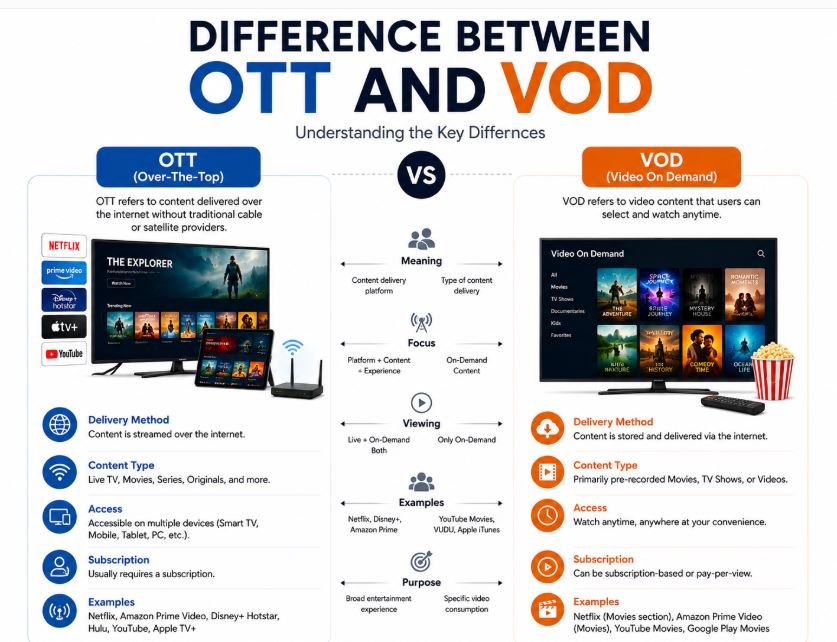
The core difference is simple. OTT is the delivery system that sends content over the internet. VOD is the type of content that lets you watch anytime.
Think of it this way:
- OTT is the highway.
- VOD is one kind of vehicle that travels on that highway.
An OTT service can include VOD libraries, live streams, and linear channels. A VOD service focuses only on on-demand titles and may or may not use OTT delivery.
Other key points that separate OTT vs VOD:
- Scope – OTT covers the entire platform and technology. VOD refers only to the on-demand viewing model.
- Content mix – OTT often mixes live TV, sports, news, and VOD. Pure VOD usually offers only pre-recorded titles.
- Access method – OTT always needs an internet connection. Traditional VOD can sometimes work through cable set-top boxes without full internet streaming.
- Business model – OTT commonly uses subscriptions (SVOD), advertising (AVOD), or transactions (TVOD). VOD can appear in all three models but is defined by user-controlled timing.
Comparison Chart of OTT and VOD
| Aspect | OTT | VOD |
|---|---|---|
| Full Form | Over-The-Top | Video On Demand |
| Main Meaning | Internet-based delivery platform | On-demand viewing model |
| Content Type | Live + On-demand + Originals | Mostly pre-recorded titles |
| Internet Required | Always | Usually (but not always in older systems) |
| Examples | Netflix, Disney+, Hulu, YouTube TV | Netflix library, iTunes movies, cable VOD |
| Flexibility | High – live and anytime viewing | High – anytime viewing only |
| Typical Pricing | Monthly subscription or free with ads | Subscription, rental, or purchase |
This side-by-side view makes the difference between OTT and VOD easy to see at a glance.
Pros and Cons of OTT and VOD
Pros of OTT
- Combines live TV and on-demand content in one place
- Works on almost any internet-connected device
- Offers original exclusive shows and movies
- Supports multiple user profiles and recommendations
- Often cheaper than traditional cable packages
Cons of OTT
- Needs a reliable internet connection
- Subscription costs can add up if you join several services
- Content libraries change when licensing deals end
- Quality can drop during peak internet usage times
Pros of VOD
- Complete control over when you watch
- No fixed schedules or waiting for reruns
- Easy to pause, rewind, or rewatch
- Wide choice of movies and series across genres
- Available inside both OTT apps and traditional cable systems
Cons of VOD
- Limited or no live sports and news in pure VOD services
- Some titles require extra rental or purchase fees
- Library size depends on the provider
- Older cable-based VOD systems can feel outdated
Benefits of OTT and VOD
Both models bring clear advantages to modern viewers.
Benefits of OTT
- Cuts the cord from expensive cable or satellite packages
- Delivers content to phones, tablets, Smart TVs, and computers
- Provides personalized recommendations based on viewing habits
- Supports 4K, HDR, and multi-language audio in many cases
- Gives access to global content that traditional TV rarely offers
Benefits of VOD
- Lets you build your own schedule around work, family, or travel
- Removes the frustration of missing a favorite show
- Makes binge-watching entire seasons simple
- Works well for educational content, documentaries, and niche films
- Allows repeated viewing without extra cost on subscription platforms
When combined inside one OTT service, these benefits create a flexible and powerful entertainment experience.
Read also more related topics: IPTV vs YouTube TV
Difference Between IPTV and Sling TV
What is the Difference Between IPTV and Cable TV
Difference Between Kodi and IPTV
Which Is Better: OTT or VOD?
Neither option is automatically better. The right choice depends on what you want to watch.
Choose OTT if you want:
- Live sports, news, or linear channels
- A single app that covers most of your viewing
- Original exclusive series and movies
- The ability to cut the cord completely
Choose pure VOD if you want:
- Maximum control over timing
- A focused library of movies and series
- Occasional rentals or purchases without a monthly fee
- Simple on-demand access without live elements
Most people today prefer full OTT platforms because they already include strong VOD libraries plus extra live options. Services like Netflix, Disney+, and Amazon Prime Video give you both worlds in one subscription.
Frequently Asked Questions
What is the main difference between OTT and VOD?
OTT is the internet delivery method. VOD is the on-demand viewing style. OTT platforms often contain large VOD libraries.
Is Netflix OTT or VOD?
Netflix is an OTT platform that primarily offers VOD content. It delivers everything over the internet and lets you watch titles whenever you choose.
Can VOD exist without OTT?
Yes. Traditional cable companies still offer VOD through set-top boxes that do not always rely on open internet streaming.
Is YouTube considered OTT?
Yes. YouTube is a major OTT service. It delivers both live streams and vast amounts of on-demand video over the internet.
Do I need both OTT and VOD?
Most modern viewers get both inside one OTT subscription. Separate pure VOD services are useful only for specific rental or niche content needs.
Which costs less – OTT or VOD?
Subscription OTT services often cost less than buying or renting many individual VOD titles. Free ad-supported OTT platforms can cost nothing.
Conclusion
The difference between OTT and VOD is clear once you separate the delivery system from the viewing model. OTT brings content over the internet and can include live channels, originals, and on-demand libraries. VOD simply means you control the start time of any title.
In 2026, most popular services blend both strengths. Understanding OTT vs VOD helps you pick platforms that match your habits, budget, and preferred devices. Whether you want live sports, binge-worthy series, or a simple movie night, the right combination is already available. Choose wisely and enjoy content on your own schedule.
2 thoughts on “Difference Between OTT and VOD | A Clear Guide for 2026”